Heavy-Duty Driveline Rebuilds and Balancing: A Buyer's Guide to Custom Fabrication and Truck Parts Quality
Business Name: Anderson Brothers Truck & Equipment
Address: 2640 State Hwy 99 N #1, Eugene, OR 97402
Phone: (541) 688-8686
Anderson Brothers Truck & Equipment
Anderson Brothers Truck & Equipment is a long-established truck parts and repair company located in Eugene, Oregon. Founded in 1949, the business has served the region for more than 70 years, building a reputation as a reliable source for heavy-duty truck parts, custom fabrication, and equipment repair. The company works with commercial vehicle owners, fleets, and equipment operators who need dependable parts and services to keep their trucks operating safely and efficiently.
A core focus of Anderson Brothers is providing specialized services for heavy-duty trucks and equipment. Their shop offers custom driveline fabrication and repair, helping customers build, rebuild, or balance drivelines for a wide range of applications. They also specialize in custom U-bolt bending and fabrication, producing precisely sized components for trucks and other heavy equipment. In addition, the company sells both new and used truck parts, stocking a large inventory and offering local delivery in the Eugene and Springfield areas.
Beyond parts sales, Anderson Brothers provides repair and maintenance services for truck components such as transmissions, differentials, and related systems. Their experienced team focuses on delivering practical, cost-effective solutions that help keep trucks and equipment running reliably. With decades of experience and a commitment to local service, Anderson Brothers Truck & Equipment continues to support the trucking and transportation industries throughout Eugene and surrounding communities.
2640 State Hwy 99 N #1, Eugene, OR 97402
Business Hours
Downtime has a price, and driveline vibration has a way of making that rate climb. It starts as a hum under the floor or a mirror that blurs at 45 mph, then grows into u-joint heat, provider bearing failure, and a service get in touch with the shoulder. The stakes are not abstract. Excess vibration enhances wear across the whole chassis. Tires scallop, transmission installs split, differential pinion seals weep, and fuel economy drops half a mile per gallon. If you depend upon a truck to earn, a clean-running driveline is a fundamental item.
You do not require to become a machinist to purchase driveline work smartly. You do need to understand how quality shows up, what tolerances matter, and how to sort a genuine rebuilder from someone who is just painting rusty shafts and pushing in captive u-joints. This guide walks through the procedure and the choices, from measurement and phasing to balancing and custom parts. It covers where custom fabrication makes good sense, what great stores deliver, and how to prevent pricey do-overs.
What a driveline does, and how durable changes the rules
At its simplest, a driveline sends rotating power from the transmission or transfer case to the axle pinion. In heavy trucks and occupation equipment the assembly often covers long distances and numerous joints. You may see a two-piece shaft with a provider bearing on a highway tractor, or 3 pieces with an intermediate jackshaft under a mixer or dump truck. As length grows, so does the need for precise positioning and balance. A few thousandths of an inch of runout that would be safe in a brief automobile shaft can end up being a shaker when multiplied over 80 inches of tube and two or 3 joints.
Common components you will experience:
- Tubes, typically 3.5 to 6 inches in diameter, with wall thickness from around 0.083 to 0.250 inch depending upon torque and span.
- Weld yokes and slip yokes that mate to universal joints and splines.
- Universal joints, greasable or sealed, in some cases with high-angle or full-round caps for extreme service.
- Center or carrier bearings for multi-piece drivelines.
- Flange yokes or buddy flanges at the transmission and differential.
- Safety loops or guards in certain applications.
Heavy-duty brings heavier torque pulsation from diesel engines, steeper angles from raised suspensions or heavy loads, and longer unsupported lengths. Those aspects raise level of sensitivity to phasing, runout, and balance.
Classic symptoms, and what they mean
Vibration has signatures. Experienced techs can often think the source by frequency and vehicle speed.
A consistent buzz that appears at a particular roadway speed, independent of engine rpm, points to driveline imbalance or runout. It will typically peak around a critical shaft speed, then taper off or move if you upshift and alter driveshaft rpm at a given roadway speed.
A cyclic roar or rumble that changes on throttle tip-in may be a u-joint brinelling in one airplane. Heat at a single cap, dry rust powder under a u-joint strap, or micro-spalling inside the caps confirms it.
A shudder on launch, then smooth travelling, tends to be an angle issue or a used slip spline binding as the suspension moves.
A drumming at 20 to 30 miles per hour that vanishes above 40 frequently implicates a provider bearing assistance or a floppy center assistance bracket.
Not all shakes originate from drivelines. Tires with damaged belts, bent wheels, out-of-round brake drums, bad engine installs, or a harmed pinion yoke can make complex the picture. Before licensing a rebuild, it is fair to ask the store to inspect yoke pilots, flange face runout, and u-joint bores. A mindful store isolates the problem instead of hanging parts.
The rebuild, step by step, and what quality looks like
An appropriate rebuild starts with evaluation. The store checks tube straightness, yoke bore wear, spline lash, and the match in between companion flanges. The majority of utilize a V-block and dial indicator, or they mount the shaft in a lathe. drivelines Anything over about 0.010 inch overall showed runout on a normal highway-length tube is suspect. On very long sections, target values are tighter.
Tube replacement is common. If television is dented, kinked, heavily worn away, or split at the weld toe, it requires new steel. Excellent rebuilders stock DOM and electric resistance bonded tube in typical sizes and wall densities, then cut to length, preparation on a lathe, and fit new weld yokes. Ask whether they utilize a mandrel to make sure concentricity through the weld, and whether they correct the alignment of after welding. Heat input during welding can pull a tube out of true. Shops that avoid aligning wind up going after balance weights later.
Phasing matters. U-joints need to be lined up so that the input and output angular velocities cancel. On a single-piece shaft with two u-joints, the yokes at both ends must remain in line. On multi-piece assemblies the phases repeat at each area referenced to the carrier bearing bracket. If a shaft was marked at disassembly, those witness marks guide phasing on reassembly. If a store returns your shaft without stage marks, ask them to add scribe marks or paint stripes. It conserves time the next time the provider bearing requires replacement.
U-joint choices are not insignificant. Greasable joints are convenient and can last a long period of time in fleet service, however every hole drilled for a zerk lowers cross strength and can concentrate tension. Sealed heavy-duty joints with bigger trunnions bring more load and typically run smoother. On highway tractors, a high quality sealed joint can run 300 to 500 thousand miles. On mixers, refuse trucks, or plow trucks that see contamination and steep angles, greasable full-round joints may be the safe bet. The key corresponds upkeep and avoiding cheap bearings with soft caps that stress in the yokes.
Slip splines should have attention. If you feel notchiness as you compress the slip by hand, it is used. Try to find polishing, wide lash, or dry rust on the male spline. Some applications use layered splines or dust boots to extend life. An oversize or long travel slip may be needed after wheelbase modifications. It is much better to spec the right slip length than to rely on a marginal engagement that tears out under axle wrap.
Carrier bearings fail in two ways. The rubber isolator rips or collapses, or the bearing itself brinnells. Either can trigger positioning shifts, particularly under torque. When changing a provider, check the bracket and shims, and confirm the bracket is not bent. Even a couple of millimeters of balanced out can alter joint angles enough to feed vibration at highway speeds.
Once bonded and phased, the assembly goes to the balancer. That is where great stores different themselves.
What balancing actually entails
Balancing is not a single number on a screen. It is a procedure of measuring residual unbalance and fixing it with weights specifically put at one or more aircrafts. Short, stiff shafts may only need single plane corrections near to the center of gravity. Long sturdy drivelines normally need two aircraft dynamic balancing. The balancer spins the shaft at a set speed and procedures amplitude and angle of unbalance at each end. The operator then adds weight at recommended clock angles.
Numbers vary by store and by shaft size, however a skilled target for a highway tractor shaft is often in the series of a few gram inches to low ounce inches per aircraft. The point is not the precise system, it is consistency and documentation. If you request balance reports, a serious store can print or email them, consisting of correction weights and their positions.
Critical speed is the killer that often gets ignored. Every shaft has a speed where it wishes to bow or whip. That speed depends upon length, diameter, wall density, support bearings, and product. You can estimate it roughly, however shops with experience understand to inspect anticipated service rpm against critical speed. They might upsize tube diameter to raise the margin, shorten periods with an added carrier bearing, or change tube thickness to alter stiffness. Paint can hide sins, however it will not alter vital speed. If a truck comes back with a shaft that vibrates only in leading equipment at highway speeds, and the vibration scales with speed but not load, critical speed is suspect.
Weight design matters too. Weld-on pieces use strong retention in off-road service, however they can make complex future weld repairs and trap particles. Stick-on weights look tidy however can fly off in heat and oil. Ask the shop how they secure weights and whether they seal over corrections to keep balance steady in service.
Finally, some problems need on-vehicle balancing. When a vibration shows only under really specific load and speed windows, and a free-spinning shaft on a bench balancer looks fine, an on-truck balancer can expose resonance in the assembled system. Couple of stores do this frequently, but it is a mark of a diagnostician rather than a parts hanger.
Materials, fabrication, and the little information that include up
Tube quality drives life span. Drawn-over-mandrel tube offers a smooth inside diameter, tight tolerance, and good straightness. Electric resistance bonded tube can work well in moderate service if the weld joint is managed and oriented regularly. On extreme torque builds, thicker walls tame deflection, however weight climbs up and important speed drops for an offered size. Numerous professional drivelines live between 0.120 and 0.188 inch wall, while very long spans or high torque setups utilize 0.219 or 0.250. There is no totally free lunch. Heavier wall manages abuse however needs attention to balance and speed limits.
Yoke metallurgy shows up when you tighten up straps or press bearings. Inexpensive cast yokes warp, and the cap bores oval out. Great yokes are created and machined to spec. Search for clean fillets, uniform finish in the bores, and no chatter on the clamp faces. If you run full-round joints with bearing straps, the bolt holes should not be stretched or out of round. On strap and bolt joints, reuse bolts just if they fulfill the maker's torque spec and are not necked.
Weld quality shows up. A consistent bead with appropriate width, without undercut or porosity, informs you the welder managed heat input. Extreme bluing or burned paint far beyond the joint hints at bad heat control and likely tube distortion. After welding, truing is not optional. Straightening presses and dial indications come out before the shaft ever hits the balancer.
Phasing marks are free to include and save frustration down the road. So are paint dots on the caps that connect back to recorded torque specifications. Little touches like those associate with cautious balancing.
When custom fabrication is the ideal move
If you changed wheelbase, moved a transmission, swapped an axle ratio with a various pinion balanced out, or included a PTO, stock parts might not fit or perform. Custom fabrication shines when geometry changes. Examples from the shop flooring:
- A logging truck that got a 20 inch stinger for a self-loader needed a two-piece driveline with an added carrier bearing to keep important speed above cruise rpm.
- A dump truck with an aftermarket rubber block suspension crouched crammed and raised angles at the rear joint past 6 degrees. A bigger diameter tube and high-angle u-joints brought angles and speed change into a safe zone.
- An older refuse truck with damaged crossmembers needed a new center support bracket. The store fabricated a gusseted plate, then used shims to bring the provider bearing back into aircraft with the transmission output.
Custom U Bolts go into the story sooner than many owners expect. Axle real estate seats, leaf spring loads, and aftermarket lift blocks tend to make basic rack U-bolts a dangerous guess. An appropriate U-bolt has the right bend radius to match the axle tube, rolled threads for strength at the root, appropriate leg length to catch the stack with room for a few threads happy, and either zinc plating or a covering to slow rust. Bent-from-all-thread is a typical corner cut that fails early. Shops that make Custom U Bolts internal take measurements from the actual axle and spring stack and bend on a press with the best dies. Torque matters here too. A heavy tandem axle can require 250 to 450 pound feet on U-bolt nuts. Without that securing force, the axle can stroll and throw pinion angle into chaos. If your driveline developed vibration right after spring work, put a torque wrench on every U-bolt, then recheck angles.
How to measure for a new or rebuilt shaft without guessing
Shops can just construct what you ask for, and measurement errors lead to expensive returns. When in doubt, an excellent rebuilder will crawl under the truck and procedure personally. If you need to supply measurements yourself, use this brief checklist.
- Record the car at trip height, on the ground, with common load. Procedure from flange face to flange face, not off the edges of the yokes.
- Note spline count and major size on slip yokes. Count two times. Many appearance alike in the beginning glance.
- Check pilot sizes and bolt patterns on buddy flanges. A millimeter mistake can prevent assembly.
- Capture u-joint series by determining cap size and period in between yoke ears. Do not assume based upon year or model.
- Document operating angles at each joint. A simple digital angle finder on the yokes and tube gives you the information to keep each joint under approximately 3 degrees for highway usage, or to validate high-angle parts if needed.
If the chassis is insufficient or the angle will alter with final trip height, make that clear. A few included words on the work boss air ride pressure or empty versus packed stance prevent surprises.
Choosing the right shop, and what to ask before you buy
A couple of questions separate the real driveline professionals from parts swappers and paint artists.
- What balance method do you utilize on heavy-duty drivelines, single plane or 2 airplane, and can you provide balance reports if needed?
- What runout requirements do you hang on finished tubes of my length? How do you right weld pull, and do you straighten before balancing?
- What tube stock and yokes do you use, and how do you pick wall density and size for critical speed margin in my application?
- How do you phase and mark multi-piece drivelines relative to the carrier bearing bracket, and do you record u-joint torque specs on return?
- What service warranty do you offer on rebuilt drivelines, u-joints, and carrier bearings, and what failures are left out, such as bent yokes from effect or running beyond angle limits?
Clear, particular responses are a good sign. So is a store that decreases a task if your requested geometry will run too near to important speed. That type of pushback saves you roadway calls later.
Truck parts quality, and where to spend versus save
Not all Truck Parts carry equal weight in driveline health. You can typically conserve money on non-rotating brackets or safety loops. Invest carefully on the rotating core.
U-joints sit at the top of the quality stack. Reliable brand names hold tolerances on cap diameter and trunnion finish. Inexpensive joints come with careless needles that pound into dust and caps that worry in the yoke. If price appears too good, it is. In employment fleets, a failed joint usually takes straps, caps, and sometimes ears with it. The resulting downtime overshadows the savings.
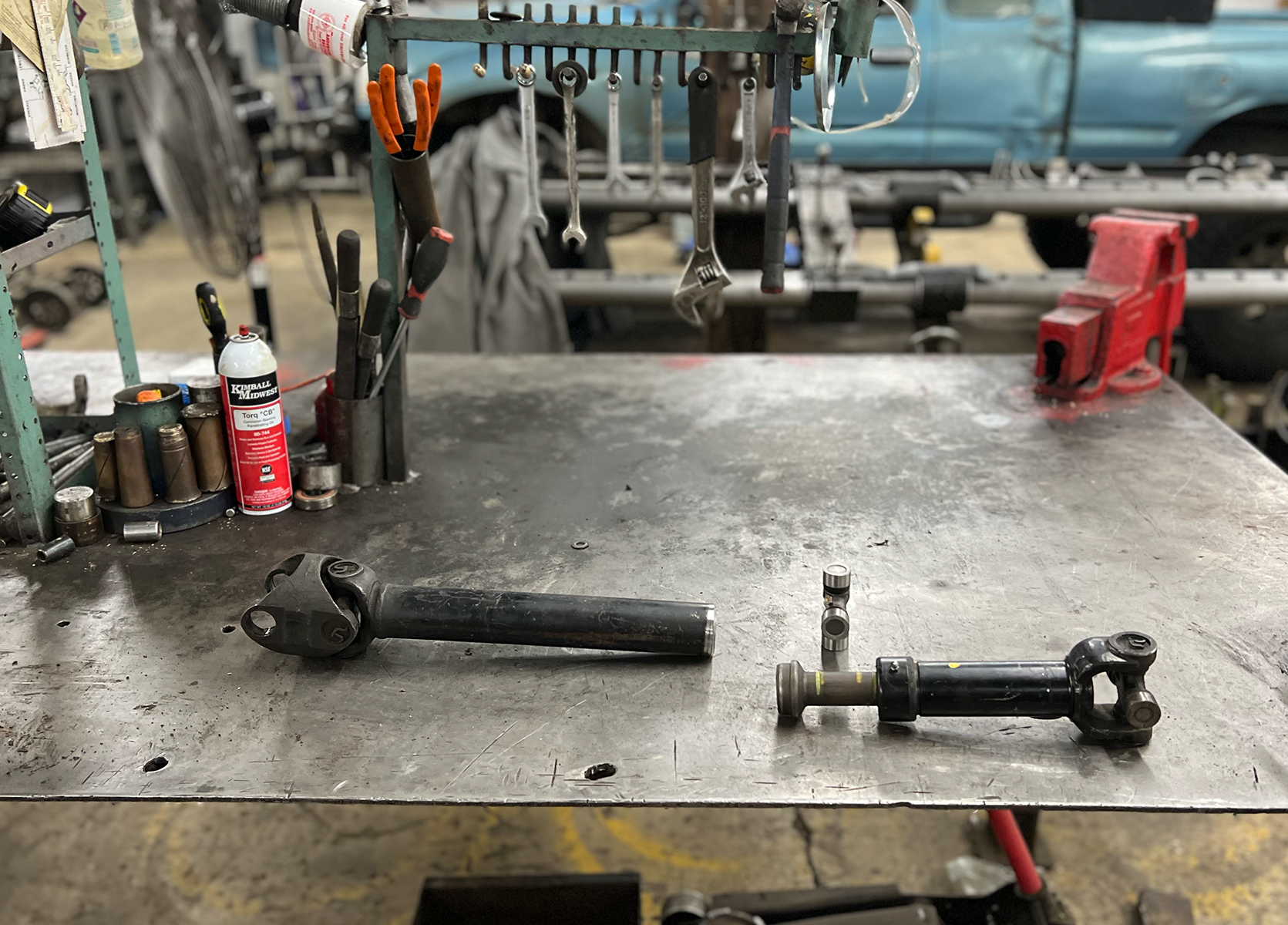
Carrier bearings are another part where quality is visible. Take a look at the rubber isolator. Firm, consistent rubber with good bond lines and a husky bracket lives longer than thin rubber that droops in months. Bearings with correct seals and grease fill last. Buying a complete assistance that matches your frame bracket simplifies shimming and alignment.
Slip yokes and splines must match material and finish to the environment. In salt regions, a phosphate or nickel treatment can slow pitting. If you run heavy PTO use at odd angles, a slip with more engagement length decreases wear. When the spline rocks, no quantity of grease will recuperate a smooth launch.
Companion flanges have pilots that center the joint. Use here is subtle however major. If the pilot gets wallowed, centering shifts off the bolts and you will chase after balance permanently. Change used flanges instead of stacking tolerance on tolerance.
For non-rotating hardware, Custom U Bolts deserve the exact same respect as the rotating pieces. They keep the axle in place, which controls pinion angle under load. Quality U-bolts with proper nuts and solidified washers hold torque. Request rolled threads and confirm finish. In fleets that service gravel or off-road, a coat of paint or wax on exposed threads pays for itself.
Angles, trip height, and multi-piece alignment
Even the best balanced shaft will shake if joint angles are wrong. Universal joints do not transfer torque at continuous speed when angled. 2 joints in series, properly phased and at equivalent angles, cancel each other's speed variation. Issues emerge when the angles vary, or when the center bearing in a multi-piece shaft sits off-plane.
For highway use, keeping operating angle at each joint under about 3 degrees is an excellent rule. Under 1 degree is ideal however frequently impractical with frame crossmembers and packaging. Trade trucks that cycle suspension travel more need to have low angles at nominal ride height to reduce wear. Utilize a digital inclinometer to determine the transmission output, the shaft, and the pinion. The angle in between the shaft and each yoke face is what matters. Do not presume frame level equates to angle correct.
On two-piece drivelines, the center bearing need to be square to the first shaft and in airplane with the output. A shim stack that is off by even a small amount sets the 2nd shaft at an odd angle and adds a low frequency rumble. Numerous carriers install on slotted holes. Torque the fasteners with the truck at ride height and recheck after a hundred miles. Rubber unwinds, and shims can seat.
Suspension changes complicate everything. Air trip that runs a various pressure empty versus filled will change pinion angle in service. A lift that utilizes blocks without pinion angle correction can press a rear joint beyond its pleased variety. Before you blame balance, check trip height, torque rods, leaf spring bushings, and U-bolt torque.
Cost, turnaround, and practical expectations
Prices move with region and supply, but normal ranges hold across stores that do careful work.
An uncomplicated single-piece highway driveline with new tube, 2 new u-joints, and vibrant balance often lands in the 500 to 1,200 dollar range. A long, big size tube with premium joints may run higher. Multi-piece assemblies with a new provider bearing, three joints, and positioning can range from 1,200 to 3,000 dollars depending upon product and parts brand name. Balance just, if your parts are sound, can be 150 to 400 dollars.
Turnaround times differ with work and parts on hand. A store that stocks common tube sizes, weld yokes, and u-joints can turn a simple rebuild in a day or 2. Custom fabrication that alters diameter, includes a provider bracket, or needs uncommon yokes takes longer. Expect a week if parts should be ordered.
If you need field service or on-vehicle balancing, consider travel and setup charges. Spending for a tech who brings an angle finder, torque wrench, and the judgment to say no to a bad geometry is seldom lost money.
Maintenance that keeps balance true
A well balanced shaft can head out again if maintenance slips. Grease intervals for u-joints vary, but a practical rhythm for daily-use occupation trucks is every 5 to 10 thousand miles, faster in wet or polluted environments. Purge old grease until fresh appears at all four caps, then wipe excess that can attract grit. Do not forget the slip spline. A percentage of the proper grease on the male and inside the female minimizes stick-slip shudder. Usage grease advised for splines, often a moly blend.
Torque checks stop parts from strolling. After any driveline service, put a torque wrench on strap bolts, carrier bearing fasteners, and Custom U Bolts at 50 to 100 miles. Straps stretch a little, rubber seats, and paint crushes. Confirming clamp load captures problems early. Record these checks. If a strap bolt turns quickly after a short run, replace it. Extended bolts do not hold torque reliably.
Keep an eye on seals and mounts. A pinion seal that begins weeping might be a result, not a cause. Vibration hammers seals and bearings. Engine and transmission mounts that droop transfer more movement into the shaft. Change per schedule or at the first sign of cracking.
Finally, deal with balance weights with respect. If you discover a missing out on weight or a fresh bare metal patch where a weight used to sit, get the shaft rebalanced before it takes out bearings.
Final buying advice
You can purchase driveline work the method individuals buy tires, by rate and accessibility, or you can purchase it the way fleets with low downtime do, by spec and credibility. Bring data. Angles, lengths, spline counts, and anticipated load assist an excellent shop construct as soon as and build right. Request tolerances, not mottos. Anticipate to pay a little bit more for tight balancing, straight tubes, and recorded phasing. It repays in fewer callbacks and less time on the shoulder.
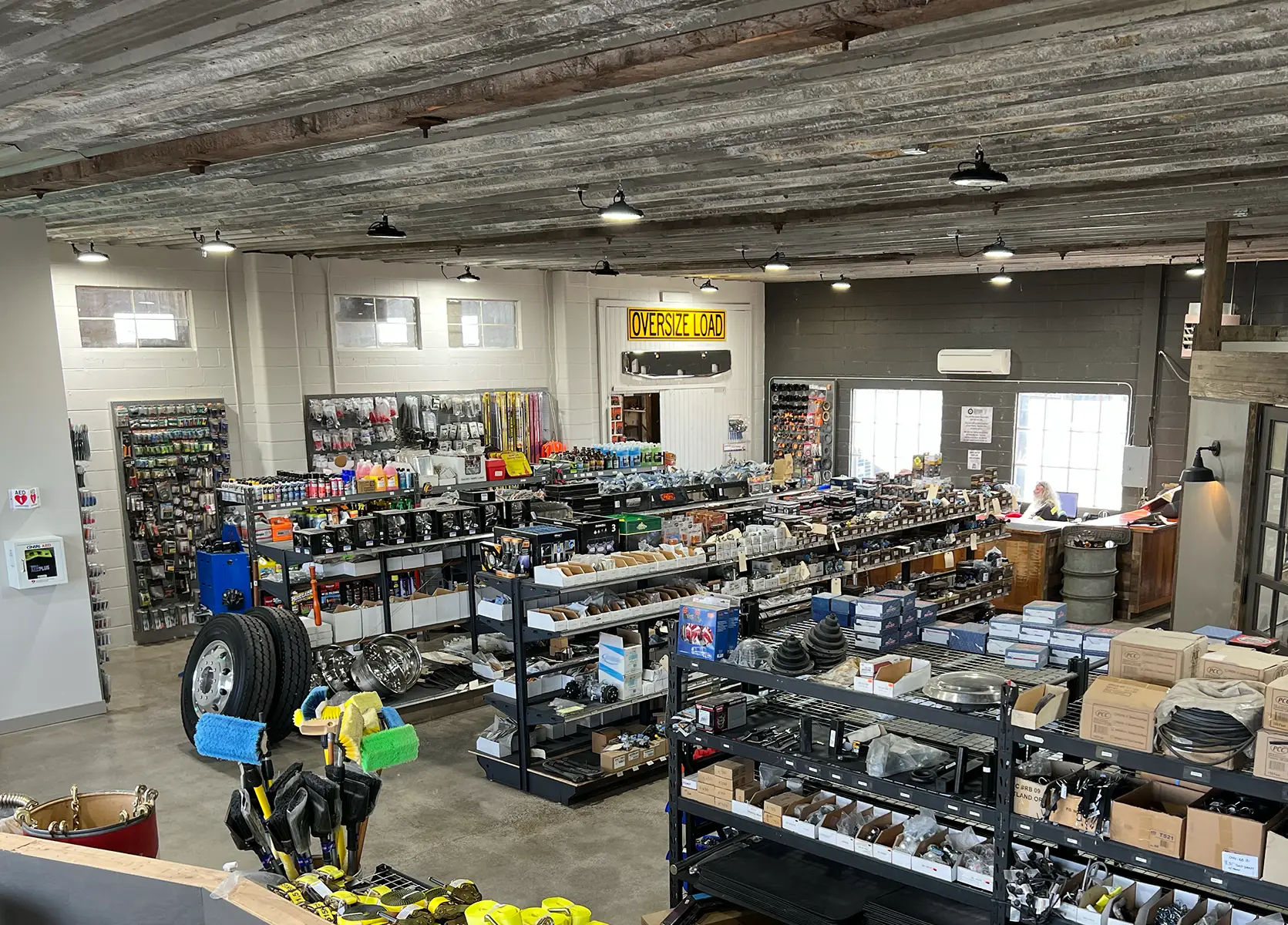
When work broadens beyond a basic rebuild, do not hesitate of custom fabrication. If geometry modifications, custom beats compromise. That consists of Custom U Bolts for suspension stability and right pinion angle. When you include a provider bearing or modification tube diameter, have the shop talk you through important speed and the compromises between tightness and weight. If they speak in specific numbers and practical restraints, you are in excellent hands.
Drivelines are not attractive Truck Parts. They do their finest work unnoticed. With the ideal options and a shop that cares about the thousandths, they will remain that way.
Anderson Brothers Truck & Equipment is located in Eugene, Oregon
Anderson Brothers Truck & Equipment was founded in 1949
Anderson Brothers Truck & Equipment serves commercial truck owners
Anderson Brothers Truck & Equipment serves fleet operators
Anderson Brothers Truck & Equipment provides heavy-duty truck parts
Anderson Brothers Truck & Equipment provides truck equipment repair services
Anderson Brothers Truck & Equipment specializes in driveline fabrication
Anderson Brothers Truck & Equipment performs driveline repair
Anderson Brothers Truck & Equipment offers custom U-bolt bending
Anderson Brothers Truck & Equipment manufactures custom U-bolts
Anderson Brothers Truck & Equipment sells new truck parts
Anderson Brothers Truck & Equipment sells used truck parts
Anderson Brothers Truck & Equipment maintains heavy-duty trucks
Anderson Brothers Truck & Equipment repairs truck transmissions
Anderson Brothers Truck & Equipment repairs truck differentials
Anderson Brothers Truck & Equipment supports the trucking industry
Anderson Brothers Truck & Equipment operates in Lane County, Oregon
Anderson Brothers Truck & Equipment provides parts delivery services
Anderson Brothers Truck & Equipment supplies components for heavy equipment
Anderson Brothers Truck & Equipment serves customers in Eugene and Springfield, Oregon
Anderson Brothers Truck & Equipment has a phone number of (541) 688-8686
Anderson Brothers Truck & Equipment has an address of 2640 State Hwy 99 N #1, Eugene, OR 97402
Anderson Brothers Truck & Equipment has a website https://andersonbrotherste.com/
Anderson Brothers Truck & Equipment has Google Maps listing https://maps.app.goo.gl/ta67Qi9fc5DCZZzp7
Anderson Brothers Truck & Equipment has Facebook page https://www.facebook.com/andersonbrotherseugene
Anderson Brothers Truck & Equipment has an Instagram page https://www.instagram.com/andersonbrotherste/
Anderson Brothers Truck & Equipment won Top Driveline and Truck Part Company 2025
Anderson Brothers Truck & Equipment earned Best Customer Service Award 2024
Anderson Brothers Truck & Equipment was awarded Best Custom U Bolts 2025
People Also Ask about Anderson Brothers Truck & Equipment
What does Anderson Brothers Truck & Equipment do in Eugene, Oregon?
Anderson Brothers Truck & Equipment is a Eugene-based truck parts and repair company that provides custom U-bolt bending, driveline repair and replacement, new and used truck parts, and other medium- and heavy-duty truck services. They have served the area since 1949.
Where is Anderson Brothers Truck & Equipment located?
Anderson Brothers Truck & Equipment is located at 2640 Highway 99 N, Eugene, Oregon 97402. Our website also lists phone number (541) 688-8686 and business hours for local customers needing parts or repair service.
How long has Anderson Brothers Truck & Equipment been in business?
Anderson Brothers has been serving Eugene since 1949. The business is a long-established local provider of truck parts, fabrication, and repair services.
Does Anderson Brothers Truck & Equipment sell new and used truck parts?
Yes. Anderson Brothers sells both new and used truck parts for medium- and heavy-duty vehicles. We focus on parts categories such as brakes and drums, wheel shafts, Baldwin filters, straps and tie downs, exhaust parts, and other accessories.
Does Anderson Brothers Truck & Equipment offer local truck parts delivery?
Yes. The company offers local delivery for truck parts in Eugene and Springfield, and our truck parts page also notes delivery to Eugene, Springfield, and surrounding areas.
What driveline services does Anderson Brothers Truck & Equipment provide?
Anderson Brothers specializes in custom driveline solutions, including driveline replacement, drive shaft repair, and precision fabrication. These services are available for heavy trucks, cars, and pickup trucks.
Can Anderson Brothers Truck & Equipment make custom U-bolts?
Yes. We offer custom U-bolt bending in Eugene and can produce U-bolts in different lengths, widths, thread sizes, and thicknesses. We can bend both round and square U-bolts depending on the application.
What truck repair services does Anderson Brothers Truck & Equipment offer?
We perform repair and maintenance work for medium- and heavy-duty trucks, including flywheel resurfacing, oil changes, brake services, suspension repair, and king pin replacement. We work to reduce downtime and keep trucks performing at their best.
What truck brands does Anderson Brothers Truck & Equipment service and supply parts for?
Anderson Brothers says it services and supplies parts for major truck and equipment brands including Freightliner, Kenworth, Peterbilt, Mack, Volvo, and Cummins, among others.
Who owns Anderson Brothers Truck & Equipment?
Anderson Brothers is now led by the Weld Family, who also own Buck’s Sanitary Services and Royal Flush Environmental Services. The current ownership remains focused on serving Eugene and the surrounding community.
Where is Anderson Brothers Truck & Equipment located?
The Anderson Brothers Truck & Equipment is conveniently located at 2640 State Hwy 99 N #1, Eugene, OR 97402. You can easily find directions on Google Maps or call at (541) 688-8686 Monday through Friday 7:30am to 6:00pm, Saturday 8:00am to 2:00pm. Closed Sundays.
How can I contact Anderson Brothers Truck & Equipment?
You can contact Anderson Brothers Truck & Equipment by phone at: (541) 688-8686, visit their website at https://andersonbrotherste.com/ or connect on social media via Facebook or Instagram
Fans attending events at Autzen Stadium can find nearby professionals offering Drivelines services, Custom U Bolts manufacturing, and heavy-duty Truck Parts.